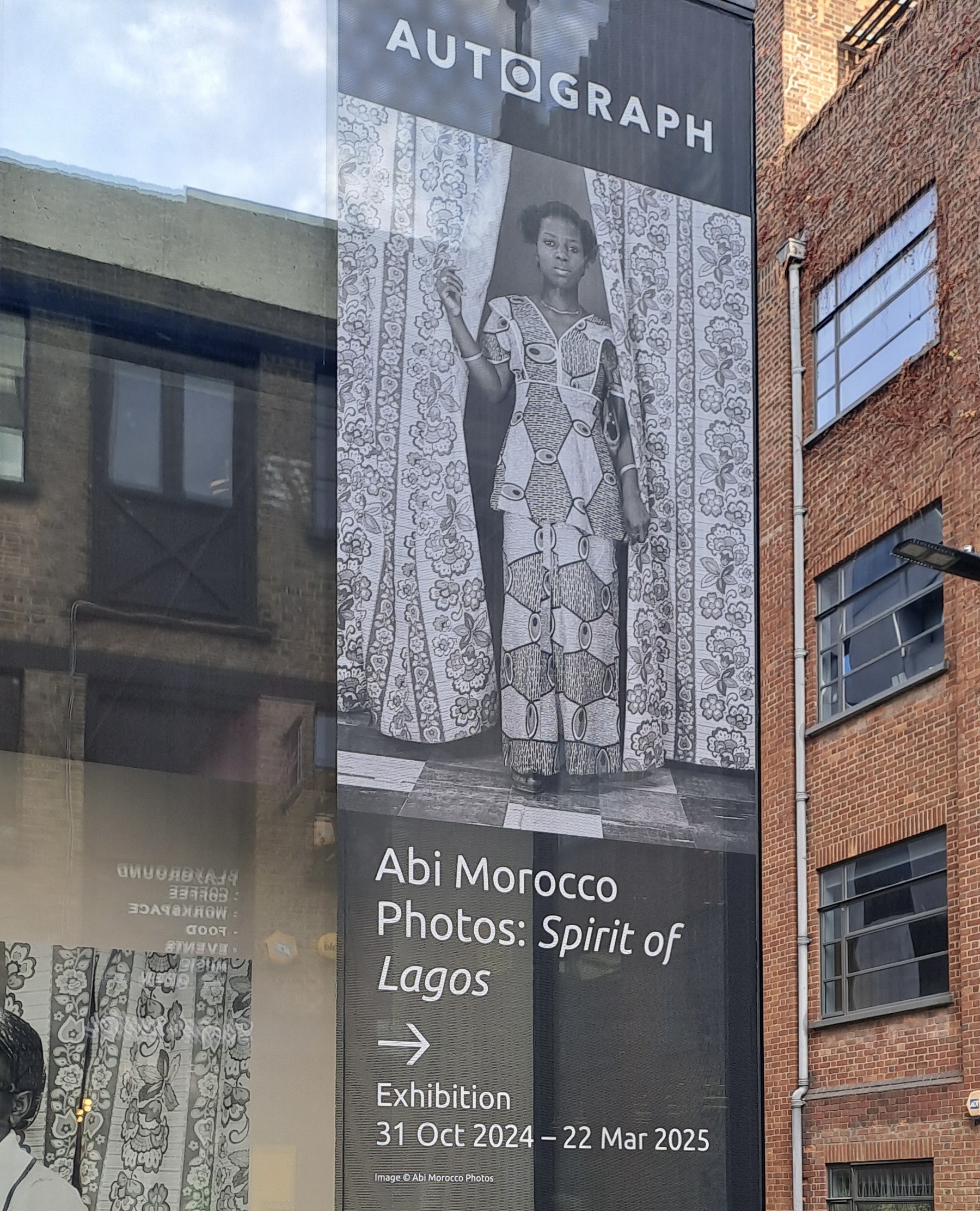
Abi Morocco Photos: Spirit of Lagos at Autograph London reveals an African agency of modernity, the knowledge of which surprisingly is just recently being revealed to the West. The exhibition is a window on the thriving and burgeoning metropolis of Lagos in the 1970s. Lagos was booming then in the 1970s because it was the capital of Nigeria where crude oil, the black gold, had just been discovered and the toddler republic was making its debut on the global economic stage.
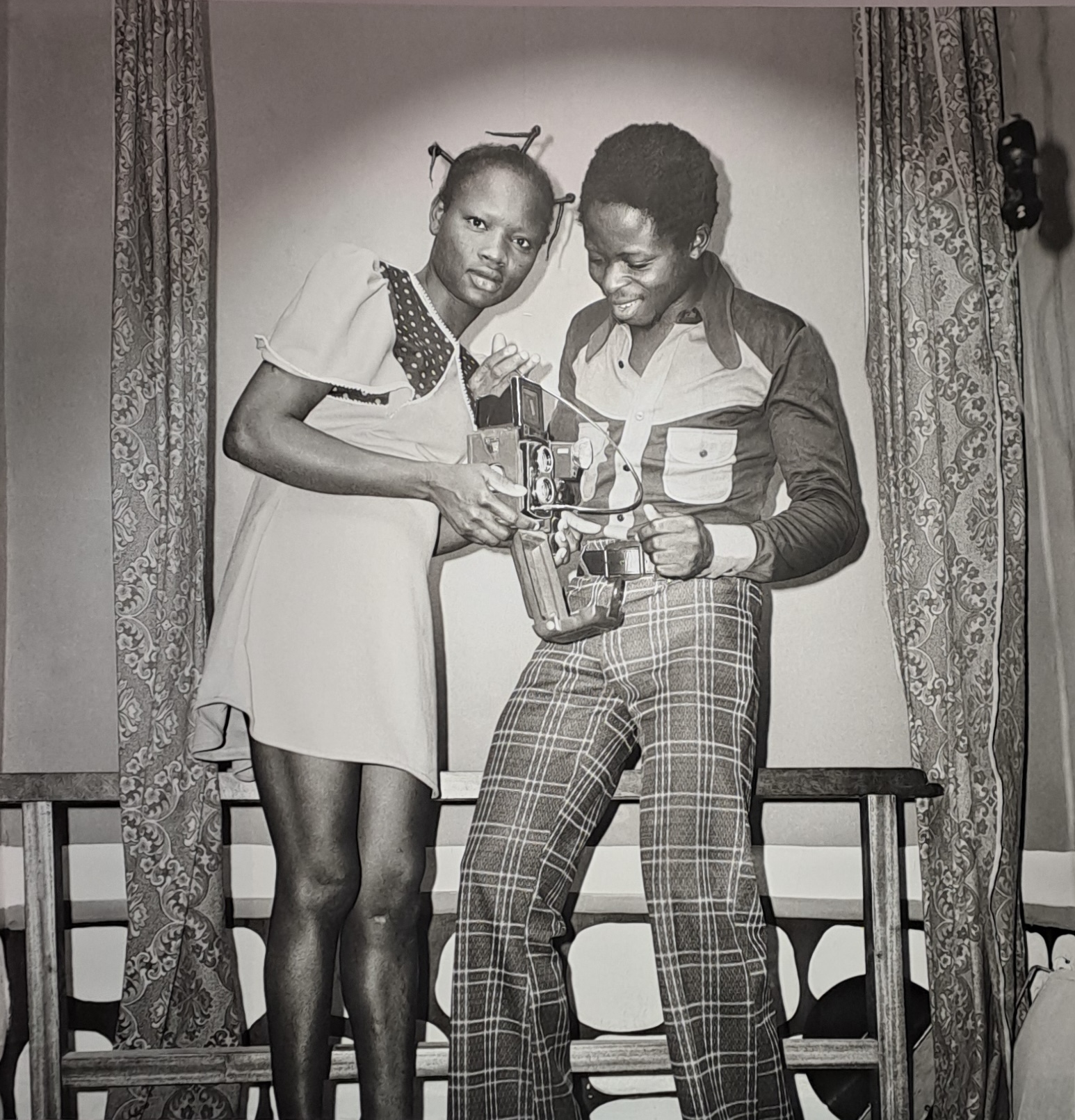
Abi Morocco Photos was curated by Lagos Studio Archives and Bindi Vora. Lagos Studio Archives “is an ongoing cultural preservation and artistic project”. The project’s goal is “to preserve … the legacy of Nigerian studio photography”. The process of preserving includes broadcasting the unique aesthetic and philosophies of this rich cultural archive through, for example, exhibitions such as Abi Morocco Photos at Autograph London. Lagos Studio Archives’ endeavour is no mean feat coming with manifold challenges.
The project’s goal is “to preserve … the legacy of Nigerian studio photography”.
One challenge is finding the life works of the photographers and studios, as the project itself highlights that it was inspired by the discovery “that many archives were being destroyed, discarded and stored away in humid conditions”. It is the conditions that many film negatives that the project eventually finds that poses another challenge, as this demands the time intensive tasks of sorting, cleaning and attempting to salvage material that had been poorly stored for decades. Salvaging and making swingeing decisions about cultural and historically significant materials is emotive.
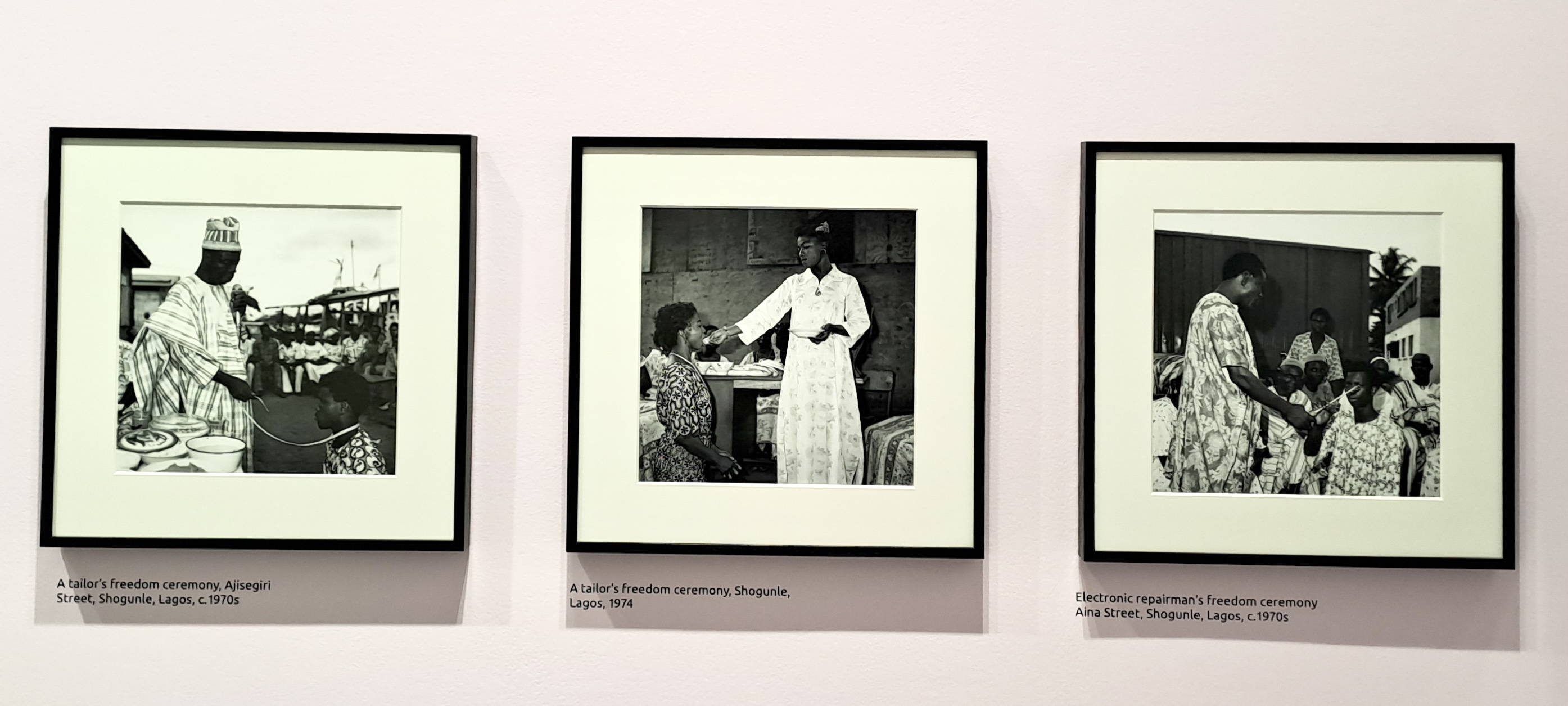
Abi Morocco Photos is a capsule look into the life of Lagosians in Nigeria’s booming 1970s. What the exhibition presents is broadly labelled studio portraits, studio photography or African studio portraiture, however much of what you see takes place outside of the studio and is a lot more fascinating than mere portraiture. In spite of this being more than portrait photography the photographs in the show tell the story of self-fashioning which is essentially what commissioned studio portraiture is about. Taking the beauty of self-fashioning out of the photo studio and infusing it with the daily lives, work and play of Lagosians to tell an engaging aesthetic story was the genius of the photography the married couple, Abi Morocco Photos and their numerous fellow Lagos and wider Nigerian photographers.
That the performance is captured at its optimum and at the key moment is the concern of both the patron and the photographer.
To the extent that photos of this exhibition are “beguiling portraits” is due to how the photographs are infused with indigenous practices, faith beliefs and ideas of cultural self-expression. The sitters who are the patrons who have commissioned the photographer are in full collaboration and are co-creators with the photographer in the process and act of performance. That the performance is captured at its optimum and at the key moment is the concern of both the patron and the photographer.
Abi Morocco Photos: Spirit of Lagos is an insight into unique expressions of modernity and practices not duplicated across other cultures. Located in London with its cosmopolitan population, the exhibition is an opportunity for intriguing travel back in time to another part of the world and distinct culture, without taking an air flight. The traveller will see curious practices and will ask questions of these photos. These will be apt questions about the photographs’ performative story and the fascinating richness of their detail.
Both the exhibition and its content are a labour of love. The exhibitions content is the output of Abi Morocco Photos, a husband and wife run studio and business partnership that thrived over decades. Continuing in the spirit of long commitment, is the exhibition itself which is the result of years of work by Lagos Studio Archives, a project began in 2015, tasked with and inspired by the rise to a challenge.
Abi Morocco Photos: Spirit of Lagos is at Autograph, London until the 22nd of March 2025. This a free exhibition you can book in advance to visit.

 GK Art Notes