DocumentA 13 and Memories of the Arab Spring

By the time DocumentA 13 opened in June 2012, the Arab Spring had hit its peak and was on the wane. None the less, it was at this stage when it was fading into history that the Arab Spring became an ideal narrative for the ever so topical and political Documenta. Addressing the Arab Spring and the obvious fact of lives that were lost to the cause was the installation by Sanja Iveković entitled The Disobedient (The Revolutionaries), 2012 which topically traced political martyrs down the annals of history.

The installation included scores of political martyrs however, for various personal reasons, these four resonated with me the most.

Documenta1932

Sanja Iveković, Detail from The Disobedient (The Revolutionaries), 2012

Mohamed Bouazizi
… was (the) Tunisian street vendor who set himself on fire on 17December 2010, in protest at the confiscation of his wares and the harassment and humiliation that he reported was inflicted on him by a municipal official and her aides. His act became a catalyst for the Tunisian Revolution and the wider Arab Spring… (Text from DocumentA 13 installation)


Documenta1930

Sanja Iveković, Detail from The Disobedient (The Revolutionaries), 2012

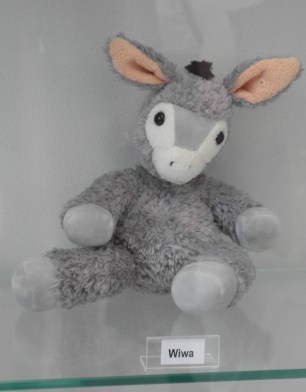
Saro-Wiwa

… was a Nigerian author, television producer environmental activist. He was a member of the Ogoni people (of) Nigeria whose homeland has been targeted for crude oil extraction since the 1950s. (He was) President of the Movement for the Survival of the Ogoni People, (leading) a nonviolent campaign against environmental degradation of (Ogoni) land and water (and) an outspoken critic of the Nigerian government. At the peak of his non-violent campaign Saro-Wiwa was arrested, hastily tried by a special military tribunal, and hanged in 1995… (Text from DocumentA 13 installation)


Documenta1928

Sanja Iveković, Detail from The Disobedient (The Revolutionaries), 2012

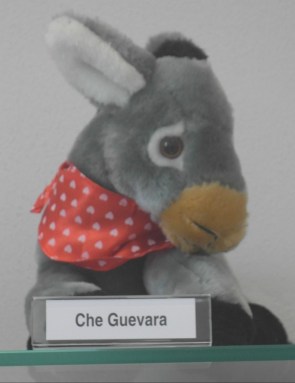
Che Guevera

…commonly known as el Che…was an Argentine Marxist revolutionary, physician, author, intellectual, guerrilla leader, diplomat and military theorist. (…) Moments before Guevera was executed he was asked by a Bolivian soldier if he was thinking about his own immortality. “No”, he replied “I’m thinking about the immortality of the revolution.  (Text from DocumentA 13 installation)
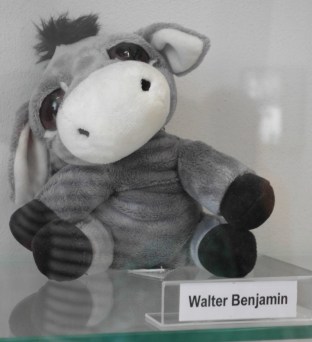


Documenta1929

Sanja Iveković, Detail from The Disobedient (The Revolutionaries), 2012

Walter Benjamin
… a German-Jweish intellectual (polymath)…(whose) work combining elements of historical materialism, German idealism and Jewish mysticism, has made enduring and influential contributions to aesthetic theory and Western Marxism, and has sometimes been associated with the Frankfurt School of critical theory. As the Wehrmacht defeated the French Defence, on 13 June, Benjamin and his sister fled Paris a day before the German entered Paris (14 June 1940), with orders to arrest him at his flat. (Benjamin escaped however) (e)xpecting repatriation to Nazi hands (he) killed himself … on 25 September 1940. (Text from DocumentA 13 installation)


Word is Sanja Iveković is exhibiting in Documenta 14 also!
Posted in documentA | Tagged , , , , , , , , , | Leave a comment

Countdown to Documenta 14

I am off the Document 14! This is a great treat, especially as I had pleasure of attending DocumentA 13 in 2012. It is amazing to have the opportunity to attend consecutive Documenta instalments, which occur once every five years. When I attended DocumentA 13 I was just about to begin my Masters programme in History of Art with Photography. Now as I am looking forward to Documenta 14 I am someway through a PhD researching West African photography history and theory.

Documenta1874

DocumentA 13, 2012. Photo: Galleria Clic

So how have I grown in my 2 Documenta years? The most significant knowledge I have come to must be the understanding that aesthetics and visuality are dominated by a Western ideal that are not universally shared. This might seem trivial on the one hand and at the same time an obvious everyday point that it needs no articulation. However, on the triviality front, having a Western ideal obsessed media, from the BBC to the paid-for broadcasting entities, can be linked directly to the serious issue of young people struggling to identify with the culture and society they grew up in, to the extent that they decide to become a jihadi fighter. For anyone struggling to see the link, the key is in understanding the diet of visuality and aesthetics these young people are raised on. Ask yourself: who is always the baddie and who is the default saviour of the planet, in the media they consume? While the Western hegemony of visuality and the media might seem obvious, understanding this for what it is and knowing how to address it, as an issue are complex. Suffice to say, at this point, doing justice to the issue of Western hegemony of the media has to be a diatribe for another blog post.

Documenta1918

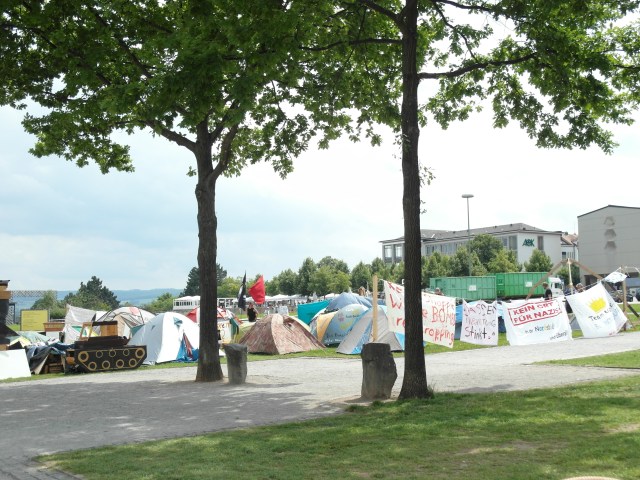
The Occupy Movement at DocumetA 13, 2012. Photo: Galleria Clic

In 2012 I remember the Occupy Movement was at its peak and it was duly represented at DocumentA 13. Also the pivotal attraction at DocumentA 13 itself was the crowdsourcing attempt to lobby UNESCO to add the earth’s atmosphere to its World Heritage List (link to World Heritage List site). Fast-forward to Documenta 14 in 2017 and it seems in some sense nothing has changed. In fact five year down the line, from 2012, we humans, as a specie especially in the West, seem to be regressing. Cue Brexit, abuse of the labour market in the gig economy, Trump and the pulling out of the US from the Paris Climate Agreement. Never mind life imitating art, here we have art playing the role of prophet in anticipation of world events! While science can be acknowledged for addressing the material trajectory of the globe, the arts and humanities should be equally respected and supported as they attempt to stir humans’ mind and steer our philosophies as we try to rule the world.

Moving swiftly on, and abruptly away from an unintended rant, my intention for this piece was to announce a series of posts on Documenta in the run up to my visit to Documenta 14. The posts would be mainly the photographs of my highlights from DocumentA 13.

See the list of Galleria Clic’s blog posts on DocumentA 13.

Posted in Art exhibition, documentA | Tagged , , , | Leave a comment

Gele ati Asọ́-Oke Exhibition: Aiming for the Footsteps of Success

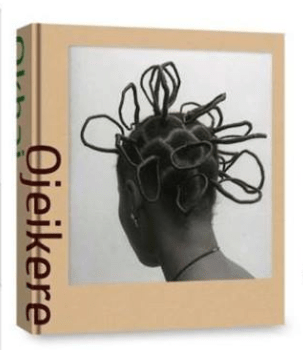
The Gele ati Asọ́-Oke exhibition is aiming to follow in the footsteps of the Centre for Contemporary Art (CCA) Lagos’s 2014 crowdfunded publication of a monograph on Nigerian Photographer J.D. ‘Okhai Ojeikere. J.D. ‘Okhai Ojeikere along with Benedy and Sons, Dr Okubanjo and others were the legendary photographers, affiliated with the Universality of Ibadan, who were documenting the city of Ibadan at its height as the seat of government for the then Western Region of Nigeria of the 1950s and 60s.

galleriaclicblog160927ojeikeremonograph01

J.D. ‘Okhai Ojeikere monograph, 2014

161 backers worldwide helped launch the publication of the J.D. ‘Okhai Ojeikere monograph, contributing an average of about £100 each to raise £15,500 exceeding the crowd funding campaign’s target of £13,500. The Gele ati Asọ́-Oke exhibition crowdfunding campaign is hoping to emulate this success.

Posted in Photography Exhibition | Tagged , , | Leave a comment

The origins of the label “Yoruba photography”

Yoruba photography is not a new term. It is at least five decades old. The anthropologist Stephen Sprague as far back as 1979 used the label Yoruba photography in his seminal academic article on the Yoruba people and the unique ways they incorporated and used photography in their culture. Some 40 years before Sprague, the German Afrophile Diedrich Westerman singled out the adoption of photography by the Obas (Yoruba kings), in the late nineteenth century, as an example of a culturally specific use of the technology, stopping short of using the label Yoruba photography.

Gallery invite

Yoruba woman with baby. Photograph: © Olu Alabi c.1970s

Post 1979 all has remained relatively quiet on Yoruba photography. Many have danced around it, for example, looking at how Yoruba photographers have helped spread the technology and skill throughout West Africa. A lot needs to be done on locating Yoruba photography in the Yoruba land itself. This is for the simple reason of showing how cultures are able to adopt technologies, put their stamp on it and become part of a global network and economy.

Posted in Photography | Tagged , , | Leave a comment

Look Van Gogh, it’s Ofosu without paint, brush or canvas!

GalleriaClic is excited to promote Edward Ofosu’s first solo exhibition of essentially iPad art. One of Ofosu’s artistic heroes is David Hockney. And why should Ofosu not admire Hockney, after all, the pioneering artist not only experimented with iPad art, he has proceeded to champion and adopt it as part of his repertoire.

David Hockney by Edward Ofosu 2014 (iPad art)

David Hockney by Edward Ofosu 2014 (iPad art)

Artists such as Vincent van Gogh, who we revere today, would have adopted and gone crazy over (excuse the pun) iPad art. Van Gogh painted with frenzy and a sense of urgency and was reputed to have produced one painting per day over the 70 days that lead up to his death. Imagine how many paintings he would have produced with his iPad art app! Using an iPad art app would have fitted in perfectly with van Gogh’s attempt, as he painted en plein air, to create a new painting each time he noticed the quality of the light change, even while he was in the middle of another painting of the same scene. His Wheat Fields series of paintings was a result of this ambition. Van Gogh’s ambitions are reflected in Ofosu’s free-flow use of iPad art

Ofosu is a prolific portrait artist and is particularly keen on observing people in action. He has been submitting entries to the BP Portrait Award for quite a few years and was at this year’s Sky Arts Portrait Artist of the Year, hosted by comedian Frank Skinner and broadcaster Joan Bakewell, showcasing his skills. Galleriaclic is suggesting that Ofosu takes a bold step and submit an iPad art painting for his next entry to the BP Portrait Award.

A Journey with the New, Ofosu’s all iPad art solo exhibition opens on Thursday, 27th November 2014 from 6pm to 9pm at Prince of Wales Surgery, 87-89 Prince of Wales road, Kentish Town, NW5 3NT. In addition to a collection of mainly portraits this exhibition includes Ofosu’s foray into landscapes and abstracts. The exhibition is on at the Prince of Wales Surgery until 20th December. This is not a GalleriaClic event.

By Depo Olukotun

Sign up to GalleriaClic’s mailing list
Like GalleriaClic on Facebook
Follow GalleriaClic on Twitter

Posted in Art exhibition, Edward Ofosu | Tagged , , , , | Leave a comment

Cai Guo-Qiang: The artist behind Blood Swept Lands and Seas of Red?

Could the Chinese artist, Cai Guo-Qiang be the originator of the look and visual idea of Blood Swept Lands and Seas of Red?

Head On, installation by Cai Guo-Qiang

Head On by Cai Guo-Qiang

Reflection-A Gift from Iwaki, installation  by Cai Guo-Qiang

Reflection-A Gift from Iwaki by Cai Guo-Qiang

Blood Swept Lands and Seas of Red at the Tower of London

Blood Swept Lands and Seas of Red by Cai Guo-Qiang?

Posted in Comment, News, Sculpture | Tagged , , , , , , | Leave a comment

Banksy’s Pigeons versus Exhibit B: Lessons in how to and how not to

For about 24 hours in Clacton-on-Sea, Essex, a contemporary work of art resonated with us as a contemporary audience, while being effortlessly clever and intelligent. Then it was stopped dead in its tracks. But this need not matter, thanks to 24 hour digital mass media Banksy’s point has been made and it will live on in our minds and virtual reality for a long time to come. Banksy has extraordinarily succeeded where another publicised artistic effort, which was also stopped dead in its tracks, has failed rather spectacularly. I am talking about Exhibit B, which in September caused a stir amongst anti-racism campaigners, and was branded racist just as Banky’s Pigeons was.

Banksy’s Racist Pigeons at Clacton-on-Sea

Banksy’s Racist Pigeons at Clacton-on-Sea

In branding them racist both Banky’s Pigeons and Exhibit B were censored but that is about where the similarity between the two artistic efforts ends. While Banky’s Pigeons confronts, Exhibit B just shocks, merely for the fun of it. While Banky’s Pigeons is clever, Exhibit B is stark and offensive. Did I get to see Exhibit B? No. Do I need to have seen it to make these judgements? No. The snatches of images of black people chained, gagged or bound I have seen, on various news media, are enough to cause me to recoil in anger and disgust.

Art has long struggled to be educational. It was in losing its ability to educate that the masses began to see it as not particularly relevant. At best it entertains and at worst it is just ignored. In the bid to counter being ignored the idea of shock tactics was born. However, we as an audience quickly moved from being shocked to becoming desensitized and maybe amused, artist Grayson Perry said as much in his Reith lectures. In the end art has become a just-because-I-can endeavour. Exhibit B is nothing more than an example of this type of endeavour.

Purveyors of Exhibit B need to be offering a lot more than the accusations of censorship and their right to freedom of expression to justify their output. Rather than resting on the crutch of free expression, the question they need to answer is: How have our efforts contributed to the debate on racism in Britain and Europe? These purveyors need to be aware that they are operating within an environment of shock and amusement. However, the history of slavery, colonialism and racism are far too fresh and their legacies far to prevalent in our society today and the daily existence of black people, to be reduced to shock tactics and amusement. Their motifs or imagery needed to be sensitive and their message needed to be clever, intelligent and relevant. Banky’s choice of birds was a clever and a sensitive motif. His message was very relevant and maybe too relevant for comfort, but his intelligent choice of location Clacton-on-Sea, in Essex meant he caught the eye of the relevant and right audience.

The purveyors of Exhibit B need to: stop bleating about censorship, take correction and be aware of how important the imagery they were presenting was in this fast moving digital age. As much as we might like to deny it our civilisation is image led and our eyes are fast becoming the sum total of our instincts. No matter how important and relevant Exhibit B’s message purported to be, its vessel or cast was black and some commentators have dared to point out that this matters. A black cast was only going to attract a black and friendly non-Black audience. I will be interested in the arguments of the purveyors of Exhibit B on how their imagery was the right one for this audience.

There was nothing complex about the imagery of Exhibit B, unlike Banksy’s clever use of pigeons. Exhibit B’s imagery was visceral and starkly recalls the trauma its likely audience should not be wasting their emotional reserve to deal with. This audience has bigger fish to fry in the grand scheme of their hybrid existence as products of a recent traumatic diaspora. That its purveyors did not see this means their ability to engage with Exhibit B’s purported narrative needs to be questioned. That they did not anticipant the framing of their imagery in this digital age means their credentials, as artists need to be questioned.

Exhibit B’s imagery was deeply flawed. Its purveyors argument of a right to freedom of expression is very weak and a creaky crutch. Freedom of expression is a tool, a means to an end, not an end in itself. With so-called rights come responsibilities.

By Depo Olukotun

Sign up to GalleriaClic’s mailing list
Like GalleriaClic on Facebook
Follow GalleriaClic on Twitter

Posted in Art exhibition, Comment, News | Tagged , , , , , | Leave a comment

Turner Prize 2014: A retort

‘It’s about owning images and disorientating them’: Turner prize 2014 nominee James Richards should not need to explain his work(!)

Posted in Art exhibition | Tagged | Leave a comment

Mishka Henner: The Brutal Beauty of Prophetic Photography

Of nine exhibiting photographers, the images of Mishka Henner captured the theme of “Consumption” in the Prix Pictet exhibition of shortlisted photographs at the Victoria & Albert Museum. In this instalment of Prix Pictet’s efforts to “harness the power of photography” to draw attention to the global impact of “Consumption” Henner’s big and bold photography prints stood out, closely followed by Hong Hao’s. Neither Henner’s or Hao’s photographs should be beautiful but they are while simultaneously driving home a message to us. Both readily stair up debate, which could either be about the environment, photography or aesthetics.

Mishka Henner, Coronado Feeders

Coronado Feeders by Mishka Henner

Henner’s Coronado Feeders uses a brutal beauty to foretell a brutal truth. Of course there is the danger that Henner’s images are so politically apt and on trend that they are clichéd but what was interesting looking at Coronado Feeders, for example, was the creation of visual impact from so politically on-trend and so emotive a subject matter. Juxtaposed with Hao, we see what visual arrest and the mosaic of impact the consumption of one individual is capable of (Hao) compared to the scaring arrest and impact of the consumer demands of a town, country, region or the globe at large (Henner).

Prix Pictet at the V&A, The Porter Gallery, Thursday 22 May 2014 – Saturday 14 June 2014.

By Depo Olukotun

Sign up to GalleriaClic’s mailing list
Like GalleriaClic on Facebook
Follow GalleriaClic on Twitter

Posted in Art exhibition, Photography | Tagged , , , , , , | Leave a comment

Thinking Big: Pondering on anarchy and futility

The world according to Zhivago Duncan

The world according to Zhivago Duncan

‘All is futile’ laments Solomon in the Bible and its all “pretentious crap” agrees Zhivago Duncan in Christie’s and Saatchi Gallery’s Thinking Big. So nothing new through the passage of time then! Futility along with anarchy seems to be the big story in Thinking Big. In spite of the haunting beauty of Erick Swenson’s Untitled (2004), the visual poetry of Kader Attia’s Ghost (2007) and the comedy of Zhang Huan’s Donkey (2005) you can not escape this unrelenting message of futility and anarchy. As an exhibition Thinking Big is either an expression of a bored society or a world in despair for its existence. Either way this exhibition is a scary story garnished with the occassional visual gem.

Detail of Jon Pylypchuk's image of anarchy.

Detail of Jon Pylypchuk’s image of anarchy.

By Depo Olukotun

Posted in Art exhibition | Tagged , , , , , , , , | Leave a comment